
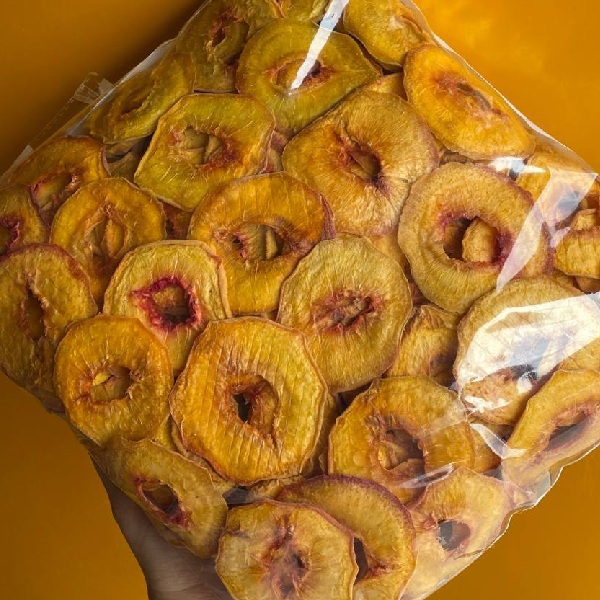
B2B Quick Callout Box
Minimum Order Quantity (MOQ): 1 Metric Ton (Sample shipments available for certified commercial buyers)
Production Capacity: 500 Metric Tons annually
Commercial Applications: Retail packaging, breakfast cereals, confectionery, trail mixes, and industrial food processing
Inquiry Status: Open for contract manufacturing, private labeling (OEM), and bulk container loading (FOB Bandar Abbas / CIF destination ports)
What Export-Grade Dried Peach Means for Buyers
Export-grade dried peach refers to peach slices that meet strict global requirements for moisture, texture, cleanliness, and visual uniformity, similar to other products classified under dried fruit intended for international trade.
Most importing countries prefer varieties with natural sweetness, bright color, and moisture levels between twelve and eighteen percent, criteria commonly applied across premium dried fruits such as dried apricot used in retail and food manufacturing.
Types of Export-Grade Dried Peach and Their Commercial Uses
1 Sun-dried dried peach
offers deeper color variation and a firmer bite, making it suitable for price-sensitive markets where traditional processing methods—similar to those used for dried apple—are preferred.
2 Machine-dried dried peach
provides consistent slice size, cleaner appearance, and controlled moisture, aligning well with supermarket standards often required for products like dried orange.
3 Soft sugar-treated peach slices
are designed for markets that favor sweeter textures, much like snack-oriented dried fruits such as dried cherry in Southeast Asia.
4 Natural no-sugar dried peach
is increasingly preferred in Europe and East Asia, where clean-label demand mirrors trends seen in traditionally processed fruits like dried plum.
Each type carries a distinct pricing structure because drying methods affect yield, labor input, and visual uniformity, a pattern common across value-added dried fruits including aloo bukhara.
Technical Specifications & Quality Compliance
Our processing lines are fully certified under HACCP and ISO 22000 management systems. Each batch of Iranian dried peach undergoes mechanical optical sorting, hand-picking, and laboratory validation to guarantee compliance with maximum residue limits (MRLs) for target import markets, including the European Union, East Asia, and the Gulf region.
Technical Specification Table
| Parameter / Entity | Export-Grade Specification |
| Product Classification | Premium Dried Peach Slices / Halves (HS Code 0813.40) |
| Botanical Origin Varieties | Prunus persica (Commercial Freestone and Yellow Clingstone cultivars) |
| Moisture Content | 12% to 18% (Customizable based on target climatic shelf-stability requirements) |
| Preservative / Treatment | SO₂ (Sulphur Dioxide) treated (Max 2000 ppm for EU compliance) OR 100% Organic Sugar-Free |
| Physical Dimensions | Uniform slices: 5mm – 7mm thickness; minimal fragment percentage (<3%) |
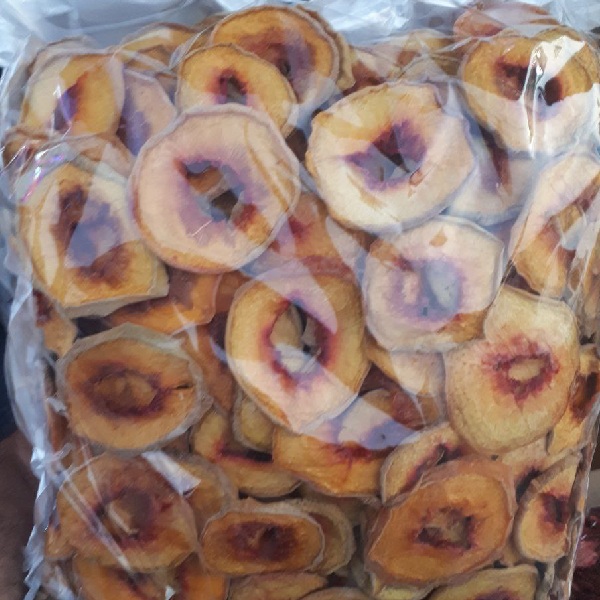
| Color & Visual Profile | Bright Golden Yellow to Warm Amber; free from dark internal necrosis or skin blemishes |
| Foreign Matter (Purity) | 0.0% critical defects; zero glass, metal, or non-vegetable matter via automated metal detection |
| Shelf Life & Stability | 12 Months from production when stored under cool, dry conditions (<15°C, RH <60%) |
How to Evaluate Quality and Grading When Buying in Bulk
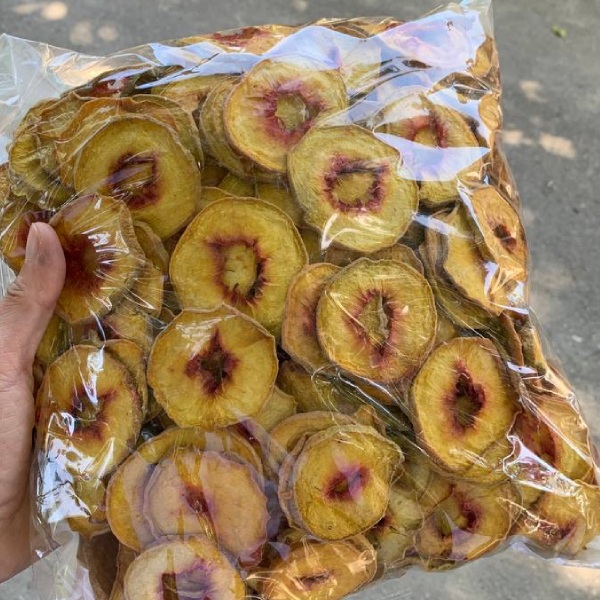
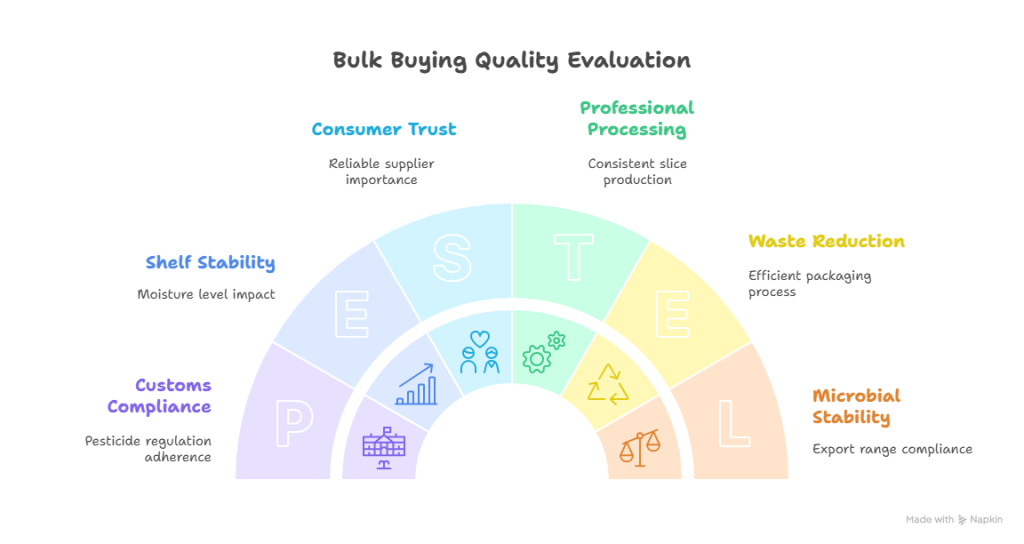
1 Check color uniformity
Premium grades show golden or light-orange tones without dark patches.
2 Assess moisture levels
Acceptable export range is twelve to eighteen percent. Lower moisture increases shelf stability.
3 Inspect slice thickness and shape
Consistent slices indicate professional processing and reduce waste during packaging.
4 Confirm absence of foreign matter
Reliable suppliers maintain strict sorting to prevent contamination.
5 Review lab test results
Microbial stability and pesticide compliance matter for customs clearance.
Bulk Pricing of Dried Peach and the Factors That Influence It
1 Quality grade
AAA and AA grades cost more due to visual consistency and better moisture control.
2 Drying method
Machine-dried peaches typically have higher prices than sun-dried products.
3 Seasonal availability
Harvest fluctuations directly influence raw material cost.
4 Packaging type
Vacuum, nitrogen-flushed, and moisture-resistant options affect final price.
5 Shipping terms and currency rates
FOB, CIF, and international freight changes influence total landed cost.
Standard Export Packaging Requirements for Dried Peach
1 Moisture-proof materials
Multi-layer bags and food-safe liners protect texture and prevent spoilage.
2 Strong outer cartons
Reinforced cartons maintain integrity during long-distance transport.
3 Private label customization
Retail brands often request custom printing, layout, and barcode placement.
4 Compliance with destination regulations
Labels must include product name, net weight, batch number, and country of origin.
Grades and Defect Tolerances
We sort every lot into one of three grades. Tolerances are measured by weight and modeled on the structure of the U.S. (USDA) standard for dried peaches, so you can compare our grades against a published reference. Each batch is checked by optical sorting, hand inspection, and laboratory analysis.
| Parameter | Grade AAA | Grade AA | Grade A |
|---|---|---|---|
| Color | Practically uniform, bright | Reasonably uniform | Fairly uniform |
| Color blend | Max 5% Grade AA color, no Grade A color | Max 10% Grade A color | n/a |
| Total defects* | Max 10% | Max 15% | Max 20% |
| Pits or pit fragments (within total) | Max 3% | Max 5% | Max 10% |
| Mold, decay, insect damage, embedded dirt, other foreign material (within total) | Max 4% | Max 5% | Max 5% |
| Decay (within total) | Max 1% | Max 1% | Max 2% |
| Live insects | None | None | None |
| Metal, glass, non-plant matter | None (automated metal detection) | None | None |
| Moisture | 12–18% | 12–18% | 12–18% |
Dried Peach Applications for Food Manufacturers
| Application | Recommended cut | Target moisture | Sulphite option | Why it works |
|---|---|---|---|---|
| Cereal, muesli, and granola | Slices (5–7 mm); chopped on request | 12–15% | Sulphured or unsulphured | Lower moisture keeps pieces chewy and limits moisture transfer into dry blends |
| Bakery (bread, cakes, muffins, bars) | Slices; chopped on request | 14–18% | Sulphured or unsulphured | Softer pieces blend into dough or batter and stay tender after baking |
| Confectionery, fillings, and fruit preparations | Chopped on request; halves for decorative use | 15–18% | Sulphured for bright color; unsulphured for clean-label | Soft, easy-to-process fruit with a consistent piece size |
| Rehydration (compotes, sauces, ready meals) | Halves or slices | 12–16% | Sulphured or unsulphured | Drier fruit absorbs more liquid and rehydrates evenly |
Our Seamless Bulk Procurement & Quality Assurance Process
We eliminate the complexities of international dry fruit sourcing. When partnering with us for your bulk dried peach requirements, our export department manages a transparent, certified multi-step procurement workflow to guarantee your peace of mind:
1. Rapid Sample Dispatch & Lab Validation: Prior to any commercial contract, we dispatch a 1-2 kg counter-sample from our current factory batch. This allows your procurement team to perform independent laboratory analysis on moisture, $SO_2$ levels, and pesticide compliance.
2. Technical Datasheet & Contract Alignment: We draft precise commercial proforma invoices detailing agreed-upon quality parameters, specific sizing preferences (slices/halves), moisture tolerances, and target delivery schedules tailored to your local custom regulations.
3. Strict Batch Processing & Cleanliness Control: Our quality assurance (QA) team monitors the entire dehydration cycle. All dried peaches undergo automated optical sorting, mechanical magnetic metal detection, and meticulous hand-picking to eliminate any potential foreign matter.
4. Third-Party Inspections (SGS/Bureau Veritas): To ensure maximum transparency, we welcome and coordinate with independent international third-party inspection agencies at our facility to verify package integrity, exact net weights, and label compliance before the containers are sealed.
5. End-to-End Export Logistics & Documentation: We handle the entire custom clearance and freight forwarding process from Iran. Our logistics department prepares flawless documentation—including Phytosanitary Certificates, Certificates of Origin, and complete commercial invoices—ensuring frictionless clearance at your destination port under FOB, CFR, or CIF Incoterms.
International Export Standards for Dried Peach
1 HACCP documentation
Ensures safe processing controls.
2 ISO-based quality systems
Provide consistent handling and manufacturing procedures.
3 Compliance with national import rules
European and East Asian markets often require pesticide testing and microbiological clearance.
4 HS Code 0813 classification
Used for customs, duty calculation, and global trade tracking.
Top Importing Countries and Global Market Capacity
1 China and Southeast Asia
High demand for soft, sweet, and colorful dried fruits.
2 Gulf countries
Prefer premium slices for retail and gifting markets.
3 India and Russia
Large-volume buyers for both premium and economy-grade products.
4 European Union
Strong interest in natural, no-sugar options with clean labeling.
Essential Contract and Shipping Considerations
1 Define moisture tolerances
Clear limits reduce disputes.
2 Specify acceptable color ranges
Contracts should match the buyer’s market expectations.
3 Use reliable freight forwarders
Proper ventilation and handling prevent texture changes during transit.
4 Maintain detailed documentation
Accurate paperwork supports smooth customs clearance.
Commercial Typologies & Production Processing
Understanding commercial yield variations and production methodologies allows commercial buyers to make data-driven supply chain decisions. As a leading dried peach supplier, we structure our inventory across four distinct market-driven options:
Machine-Dried Slices (Dehydrated Processing): Utilizing computerized multi-stage tunnel dryers, this method guarantees identical slice thickness, stable residual moisture, and pristine physical presentation required for high-end supermarket packaging.
Sun-Dried Traditional Halves: Processed in natural orchard environments, offering a robust texture and deeper organic profile, highly demanded by traditional price-sensitive distribution markets.
Natural Sugar-Free / Clean-Label Slices: Completely un-sulphured and processed without additives. This mirrors strict European organic food trends and caters directly to health-focused retail demographics.
Soft Sugar-Infused Peach Slices: Designed specifically for snacking and confectionery channels in Southeast Asian markets where soft texture and heightened sweetness profiles are commercially dominant.
Frequently Asked Questions About
What is the ideal moisture level for export-grade dried peach?
Most markets accept twelve to eighteen percent, ensuring shelf stability and safe transportation.
How can buyers confirm the quality before placing a large order?
Request samples, conduct lab testing, and arrange a third-party inspection before shipment.
Which countries import the most dried peach globally?
Major markets include China, India, the UAE, Russia, and multiple European countries.
How should dried peaches be stored?
Keep them in sealed packaging below 15°C and under 60% relative humidity, away from direct light and strong odors. Stored this way, our dried peaches keep their quality for 12 months from production. Heat and humidity darken the color and can make pieces stick together, so avoid warm, unventilated storage.
How do you rehydrate dried peaches?
Soak them in warm (not boiling) water, juice, tea, or wine until soft. Slices need less time than halves, and drier fruit absorbs more liquid than softer fruit. On an industrial line, test a sample under your own soaking conditions to confirm the water-uptake ratio before you order.
What is the difference between dried peach halves and slices?
Halves are the traditional format: larger, visually attractive, and well suited to retail packs, compotes, and rehydrated dishes. Slices (5–7 mm) are uniform in thickness, so they dry predictably, mix evenly, and portion accurately in cereals, bars, and baked goods. Both are available in all three grades. Tell us your application and we will recommend a format.
What is the difference between sulphured and unsulphured dried peaches?
Sulphured fruit is treated with sulphur dioxide to keep a bright golden-yellow to orange color. Unsulphured fruit has no added sulphur dioxide and is naturally darker, from amber to brown. Both are normal, and color alone does not show quality. Sulphur dioxide levels are stated on each batch’s certificate of analysis. In the EU, sulphites above 10 mg/kg must be declared on the label, so unsulphured fruit is the usual choice for clean-label products.
Document Verified & Published by the Quality Assurance (QA) and Export Logistics Department of Iran Fruit Processing Corp. Content optimized under Semantic SEO guidelines for international B2B wholesale procurement.

David Miller –
Which ports do you usually ship from and to the U.S.?
afruit –
We usually ship from major Iranian ports such as Bandar Abbas and Bushehr, depending on container availability and shipping schedules.
For the United States, our most common destination ports include Los Angeles (LA), Long Beach, New York / New Jersey, and Houston, selected based on the buyer’s location and transit time preferences.
We work with international freight forwarders to ensure reliable routing and proper handling throughout the journey.
Liu Fang –
How does pricing change for higher sweetness or sugar-treated grades?
afruit –
Pricing increases moderately for higher sweetness or sugar-treated dried peach grades.
Sugar-treated or higher-Brix grades typically cost 8–15% more than natural dried peach, depending on the sweetness level, texture softness, and processing method.
The price difference reflects additional processing steps, including controlled sugar infusion, longer drying time, and tighter moisture control to maintain softness and shelf stability during transport.
For larger volumes or long-term contracts, pricing can be optimized based on specification consistency and packaging format.