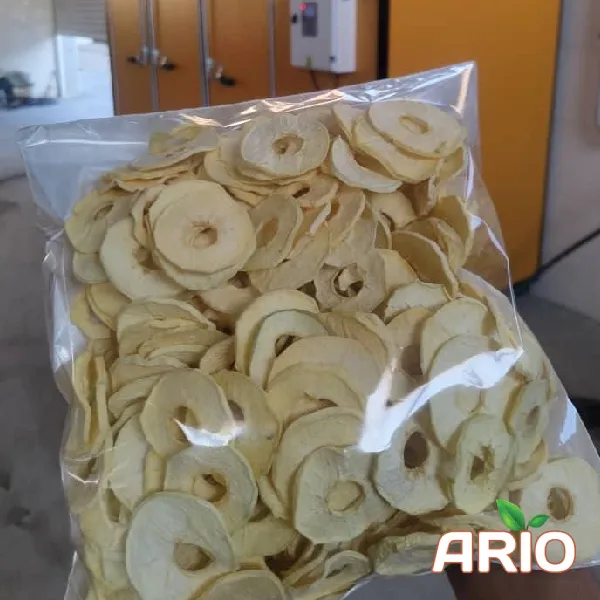
Why Iranian Dried Apple Is a Strategic Sourcing Choice
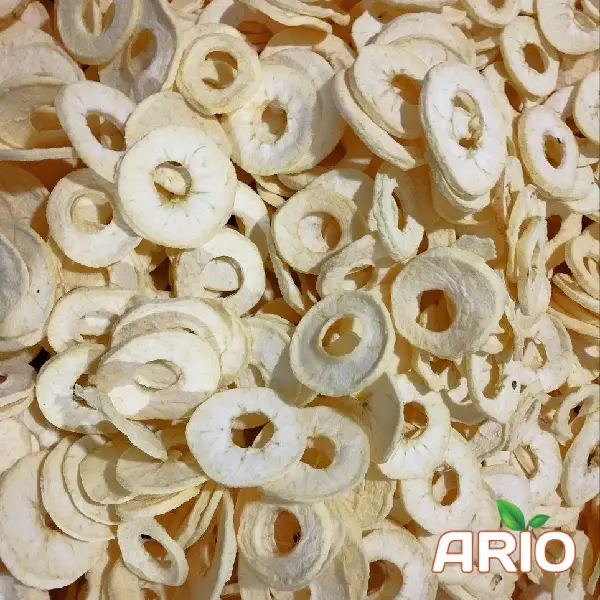
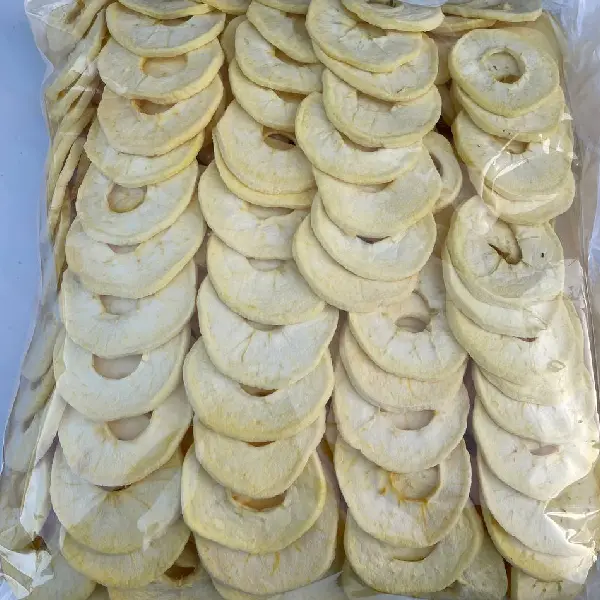
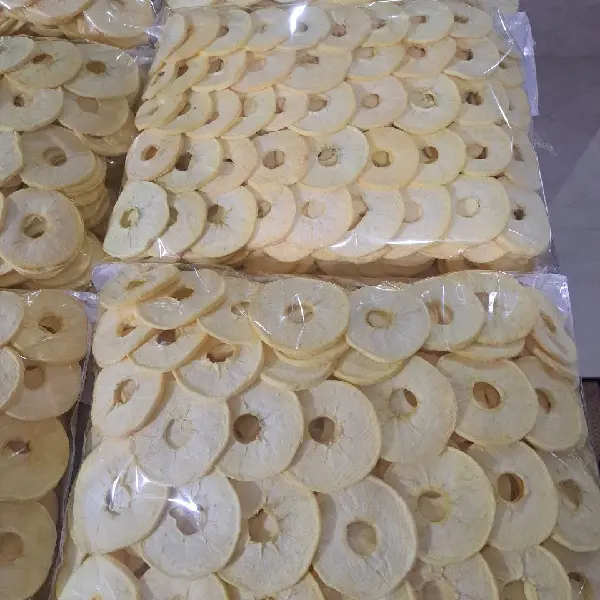
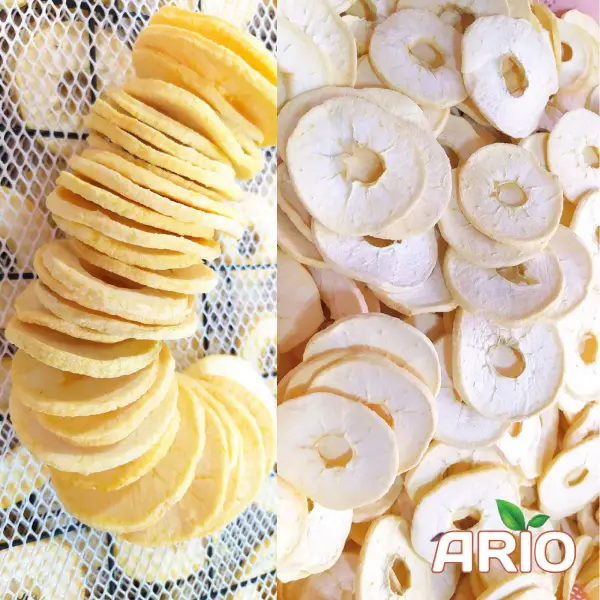
Dried apples have become a significant commodity in global food trade thanks to their long shelf life, nutritional density, and versatility across snack, bakery, and cereal applications. As a direct Iran Dried Apple Manufacturer, we process fruit from Iranian orchards into export-grade dried apple slices and rings for bulk buyers, wholesalers, and food manufacturers worldwide.
Iran’s growing conditions — particularly in its northwestern apple-growing provinces — combine with traditional and modern drying techniques to produce dried apple with strong natural sweetness, consistent texture, and competitive pricing compared to other origin countries.
Leading Exporters and Importers of Iranian Dried Apple
Understanding the major players in the Iran Dried Apple trade is crucial for strategic sourcing and market penetration. Many countries that dominate the Iranian Dried Apple trade are also significant exporters of other Iran dried fruits which allows businesses to diversify their product portfolios and optimize logistics across multiple dried fruit categories.
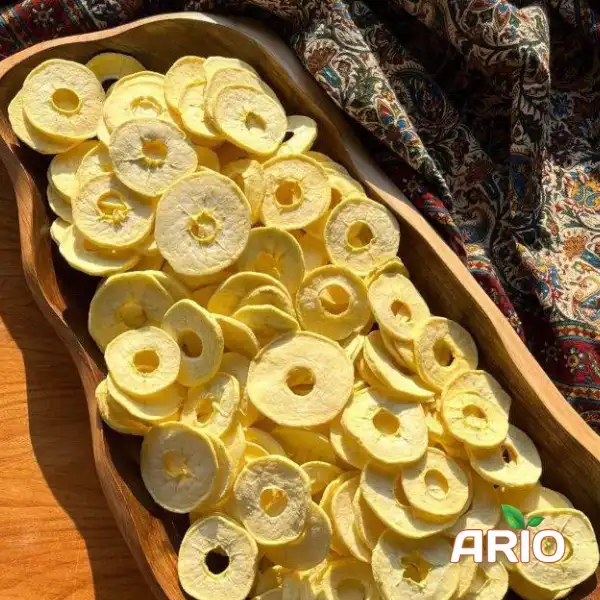
To explore more dried fruit products, click here
Our Production Process (From Orchard to Export)
Understanding how your Iran Dried Apple Supplier actually produces the product matters — it’s the difference between buying from a manufacturer and buying from a reseller of unknown-origin stock.
- Sourcing — Apples are sourced from contracted Iranian orchards at optimal ripeness.
- Washing & Sorting — Fruit is washed and graded to remove damaged or underripe pieces.
- Slicing & Treatment — Apples are cored, sliced into rings or pieces, and lightly treated with natural citric acid to prevent browning and oxidation.
- Drying — Dried using controlled, food-safe methods to preserve color, texture, and nutrient content.
- Grading & Quality Control — Every batch is checked against moisture, color, and texture benchmarks before approval.
- Packaging — Packed in vacuum-sealed bags, standard cartons, or private-label packaging per buyer specification.
Quality Standards and Certifications for Iran Dried Apple Export
Compliance with recognized quality standards is essential for successful trade in dried apples.
USDA Grade Equivalents:
- Grade B (U.S. Choice): Moisture content not exceeding 24%, good color and texture.
- Grade C (U.S. Standard): Slightly lower quality with acceptable flavor and texture.
International Standards We Follow:
- ISO 7701:1994 — Defines grading requirements, odor, taste, texture, and absence of defects; widely referenced by European and Asian importers for quality assurance.
- UNECE Standard DDP-16 — Sets export-control criteria for dried apples, covering dimensions, color tolerance, moisture levels, and contamination limits.
Certifications Available on Request:
- HACCP (hazard analysis and critical control points)
- ISO 22000 (food safety management systems)
- GFSI-aligned practices (Global Food Safety Initiative benchmarks)
- Phytosanitary Certificate for customs clearance
Key Import Markets for Iranian Dried Apple
Understanding where demand is strongest helps position Iran Dried Apple within the right trade channels.
United States — A major dried apple importer with growing interest in natural, clean-label products from origins including Iran, alongside established suppliers.
Germany — One of Europe’s strongest dried fruit markets; buyers prioritize verified sustainability and food safety certifications, making certified Iran Dried Apple a competitive option.
Netherlands — A key gateway for dried fruit entering the EU; many Dutch buyers import in bulk for redistribution across other European markets.
Russia & CIS — A long-standing, high-volume destination for Iranian dried and fresh fruit, benefiting from geographic proximity and established trade routes.
Related Iranian Dried Fruit Products
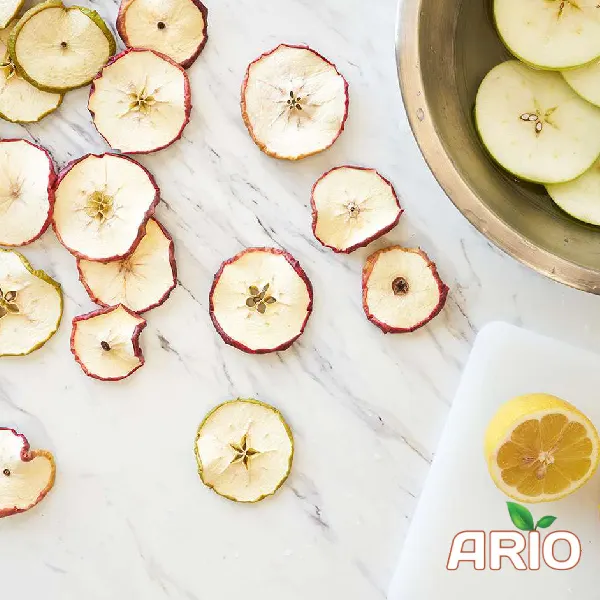
Why Choose Us as Your Iran Dried Apple Manufacturer & Supplier
As a direct Iran Dried Apple Manufacturer, we control the full process — from orchard sourcing to export-grade packaging — so buyers deal with the producer, not an intermediary trading stock of unverified origin.
As an established Iran Dried Apple Supplier, we maintain consistent stock and production capacity to support both sample orders and recurring bulk contracts.
As a full-service Iran Dried Apple Exporter, we manage certification, documentation, and Incoterms (FOB/CIF/DDP) end-to-end for buyers across Europe, Russia, the Middle East, and beyond.
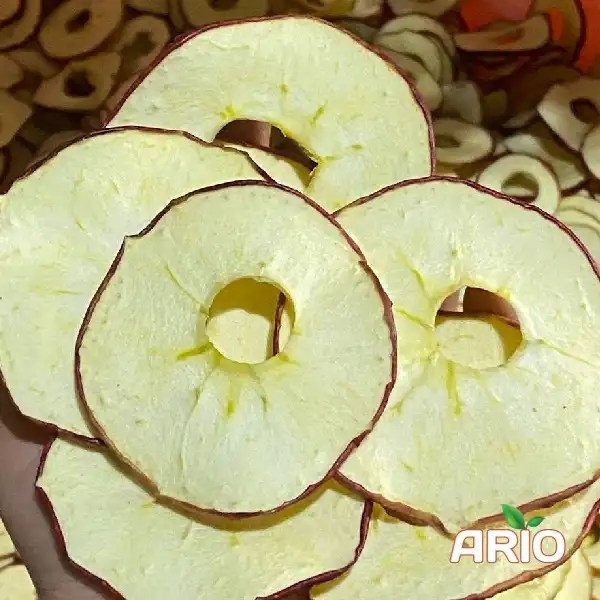
Logistics and Regulatory Considerations for Iranian Dried Apple
Efficient logistics and adherence to regulations are critical for the successful import and export of dried apples.
Best Practices for Shipping and Storage:
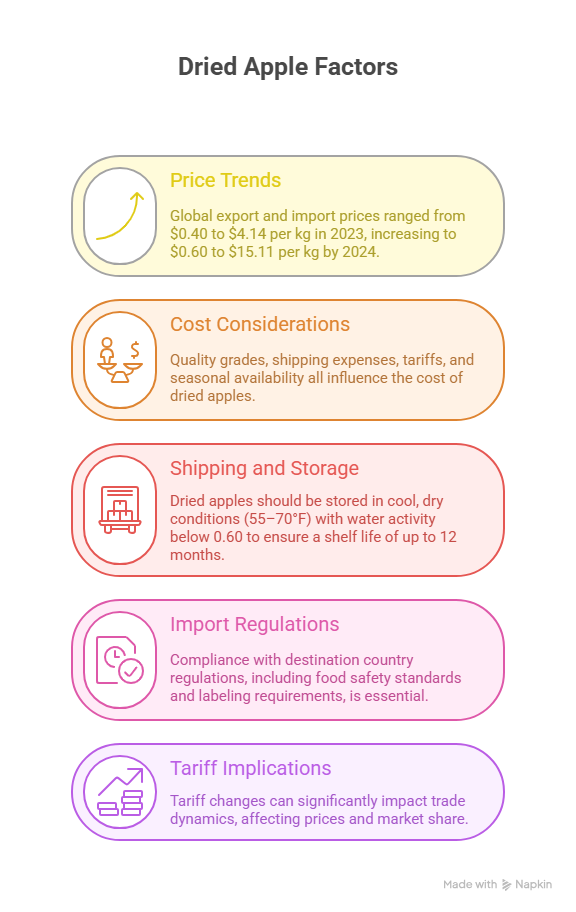
Dried apples should be stored in cool, dry conditions (55–70°F) with water activity below 0.60 to ensure a shelf life of up to 12 months.
Meduri Farms
Import Regulations:
Compliance with destination country regulations, including food safety standards and labeling requirements.
Understanding of customs procedures and documentation.
Tariff Implications:
Tariff changes can significantly impact trade dynamics. For instance, the U.S. apple industry faces challenges due to tariffs on Chinese goods, affecting prices and market share.
farmcrediteast.com
Strategic Sourcing of Iran Dried Apples
Developing effective sourcing strategies is vital for maintaining quality and cost-efficiency. Selecting suppliers with proper certifications, strong production capacity, and reliable logistics ensures consistency. Businesses often apply similar sourcing frameworks when importing products like Dried Plum, allowing for scalable and efficient procurement across different product categories.
Supplier Selection:
Evaluate suppliers based on certifications, production capacity, and compliance with international standards.
Consider suppliers from leading exporting countries like Vietnam, China, and Chile.
Volza
Quality Assurance:
Implement regular quality checks and audits.
Establish clear specifications and requirements in contracts.
Risk Management:
Diversify supplier base to mitigate risks associated with geopolitical tensions and supply chain disruptions.
Stay informed about market trends and tariff changes
Michael Anderson –
We are sourcing dried apples for our cereal production line in Germany. Can you confirm moisture levels and whether you provide ISO or HACCP certificates for export batches?
afruit –
Yes, our dried apples are processed under controlled conditions with moisture content typically below 14%. We provide HACCP and ISO 22000 certificates with every export shipment to ensure full compliance with EU food safety standards.
Sophia Martinez –
We previously imported dried apples from Iran and were impressed by the natural taste and consistency. We are now considering a larger contract for retail packaging in Spain.
afruit –
Thank you for your trust. We support both bulk and retail packaging solutions, including private label options for European retailers. We can also customize packaging to meet Spanish market requirements.