[ Request Bulk Quote ] | [ Order Lab Sample ] → Call / WhatsApp
Why Source Dried Banana from Iran
Banana is a tropical crop, and Iran’s climate doesn’t support commercial banana cultivation the way it does apricots, pistachios, or dried tomatoes. A supplier who’s upfront about that is worth more trust than one who lets you assume otherwise.
What Iran offers instead is established food-processing infrastructure, competitive labor and packaging costs, and export routes into the Middle East, Caucasus, and Central Asian markets that are often shorter and cheaper to serve than shipping directly from Southeast Asia or Latin America. Iranian processors import fresh banana through established trade channels and apply the same drying, grading, and quality control systems already proven on other export products.
For buyers, this means the value isn’t in exotic terroir. It’s in processing consistency, documentation, and a competitive landed cost for regional markets.
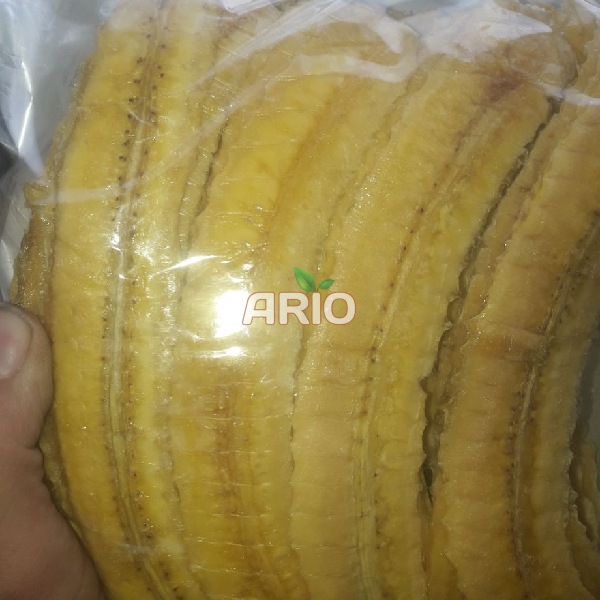
Dried Banana Formats We Supply
Dried banana isn’t one product. Format changes both price and intended use.
1. Whole Dried Banana
Full or halved bananas, slow-dried until chewy, with the shape and visual appeal that works best for premium retail packaging and standalone snacking. This format commands the highest price of the three due to the labor involved in handling whole fruit through drying without breakage.
2. Dried Banana Slices
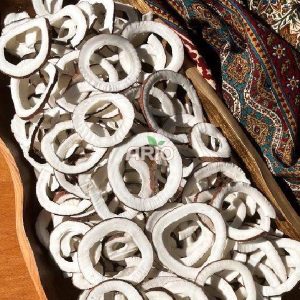
Sliced into rounds or lengthwise strips before drying, this format is the most versatile for both retail snack packaging and bulk food manufacturing, since consistent slice thickness translates into more predictable drying time and shelf behavior.
3. Dried Banana Powder
Milled from dried banana, this format is used in bakery mixes, smoothie powders, infant food formulations, and as a natural thickener or flavoring base. It’s priced differently from whole and sliced formats and typically sold by different buyers entirely, mainly industrial food manufacturers rather than retail-focused brands.
Sugar treatment is worth specifying clearly when you request a quote. Some dried banana on the market is fried in oil (banana chips) or has added sugar, which changes both the nutrition profile and the price.
Naturally dried, no-oil, no-sugar-added product is increasingly requested by health-focused brands, and it’s worth confirming which version you’re being quoted.
Dried Banana Price per Kg (2026 Wholesale/FOB)
Dried banana pricing spans a wide range globally, and the gap between the low and high end is real, not a data error. In 2024, global export and import prices for dried banana ranged from approximately $2.20 to $7.53 per kilogram, and country-level transaction prices vary even more widely depending on grade and destination: Colombia around $14.77/kg, the United States around $11.07/kg, Costa Rica around $9.48/kg, Peru around $8.00/kg, and Brazil around $5.40/kg, while wholesale bulk pricing in markets like Ukraine has been reported closer to $1.86/kg.
| Format | Approximate FOB Price (USD/kg) | Notes |
|---|---|---|
| Dried Banana Slices (standard) | $2.20 – $4.50 | Most common bulk export format |
| Whole Dried Banana | $4.50 – $7.50 | Premium retail-grade, more labor-intensive |
| Dried Banana Powder | Varies by mesh size and purity | Priced separately, typically by industrial buyers |
| Premium/organic, no-sugar-added | $8.00+ | Smaller-volume, health-focused retail sourcing |
These figures are market reference points, not a fixed quote. Currency movement, banana import costs, and shipping rates all move pricing, so request a current quotation tied to your specific volume, format, and destination port.
Nutrition Facts of Dried Banana (Per 100g)
Drying concentrates both the sugar and the nutrient density of fresh banana significantly, which is why portion size matters more here than for the fresh fruit.
| Nutrient | Amount per 100g | % Daily Value |
|---|---|---|
| Calories | 346 kcal | — |
| Protein | 4 g | — |
| Total Fat | 2 g | 2% |
| Carbohydrates | 88 g | 32% |
| Dietary Fiber | 10 g | 35% |
| Sugars | 47 g | — |
| Potassium | 1,490 mg | 32% |
| Magnesium | 110 mg | 26% |
| Calcium | 20 mg | 2% |
| Iron | 1.2 mg | 6% |
| Vitamin A | 70 mcg | 8% |
| Vitamin C | 7 mg | 8% |
Based on USDA FoodData Central reference values for dehydrated banana.
Dried banana is one of the more potassium-dense dried fruits available, at roughly four times the potassium concentration of fresh banana by weight, which is a meaningful formulation detail for buyers positioning products around heart health or post-exercise recovery. The high natural sugar content is worth flagging clearly on packaging, and buyers targeting clean-label positioning should specifically request no-oil, no-sugar-added product.
Certifications & Quality Standards
A supplier worth working with should hold recognized certifications and produce documentation on request, not after repeated follow-up.
| Certification | Purpose |
|---|---|
| HACCP | Confirms hazard control is built into the production process |
| ISO 22000 | Demonstrates a full food safety management system |
| Halal | Required for most shipments into Middle Eastern markets |
| Organic (USDA/EU) | Required to market the finished product as organic |
| Phytosanitary Certificate | Required for customs clearance in most destination countries |
Ask for a recent lab test covering moisture content and microbial limits before committing to a bulk order. A supplier who hesitates on this isn’t ready for serious volume business.
Packaging & Shelf Life
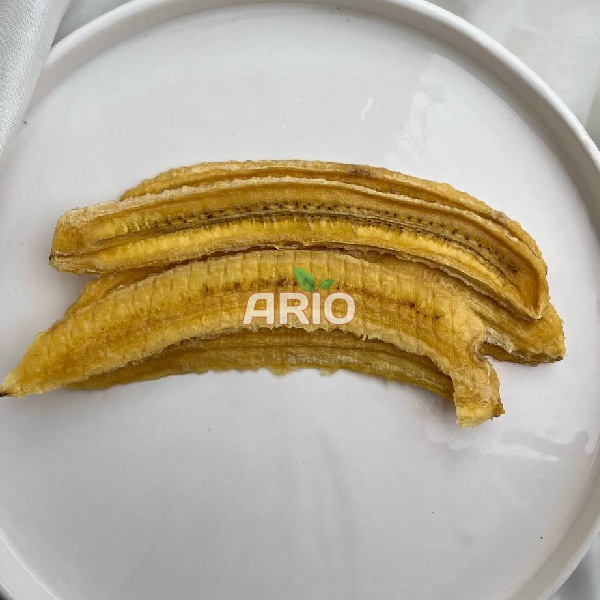
Moisture-resistant, food-grade packaging is non-negotiable for dried banana, since its sugar content makes it prone to clumping if it absorbs ambient humidity during transit.
Standard bulk formats include 5kg cartons for smaller wholesale orders, 10 to 25kg bulk boxes for food manufacturers, and vacuum-sealed bags for buyers needing extended shelf stability on longer shipping routes. Private label and retail-ready packaging is available for buyers who want to skip a repackaging step at their destination.
Properly stored away from direct sunlight and humidity, dried banana typically holds its quality for 9 to 12 months, though that window shortens for fried or higher-moisture chip-style product.
Dried Banana Manufacturer vs. Supplier vs. Exporter: What’s the Difference
These three roles get used interchangeably, but understanding the difference helps you ask better questions when vetting a source.
A manufacturer controls the actual drying and processing facility, setting moisture standards, slice specifications, and quality control directly. Buying from a manufacturer usually means better pricing and more customization, though minimum order quantities tend to run higher.
A supplier may not run a processing facility at all, instead maintaining relationships with one or more manufacturers and keeping stock available year-round, which suits buyers who want smaller or more flexible order volumes without managing multiple factory relationships.
An exporter handles logistics: documentation, customs clearance, and shipping coordination. Some companies combine all three roles, which cuts down on the number of parties in your supply chain and generally means faster answers when something needs to change.
For first-time buyers, working with a company that manufactures, supplies, and exports under one roof tends to reduce miscommunication risk, since there’s no handoff between separate businesses at any stage of the order.
How to Order Dried Banana in Bulk
1. Send Your Specifications
Provide your required format (whole, sliced, or powder), sugar/oil treatment preference, and target volume upfront.
2. Request a Sample
A reputable supplier sends a lab-tested sample before you commit to a full order. Check moisture, color, texture, and taste against your own standards.
3. Confirm Grade and Packaging
Once the sample checks out, lock in the exact format, packaging, and any private labeling requirements in writing.
4. Receive Your Quote
A proper quote specifies price per kilogram, minimum order quantity, lead time, and Incoterms such as FOB or CIF.
5. Finalize Shipment Terms
Confirm documentation, including certificate of origin and phytosanitary paperwork, before the order ships.
Contact Our Dried Banana Export Team
Send your required format, volume, and destination port, and we’ll turn around a firm quote quickly.
[ 📩 Request a Bulk Quote ] [ 🧪 Order a Lab Sample ] → Call / WhatsApp
Frequently Asked Questions
Is dried banana grown in Iran, or is it processed there?
Banana isn’t commercially cultivated in Iran’s climate. Iranian processors source fresh banana through established import channels and process it to export-grade standards using the same drying and quality control systems proven on other Iranian export products.
What’s the difference between dried banana and banana chips?
Dried banana is typically slow-dried with little to no added oil or sugar. Banana chips are usually fried in oil, which produces a crispier texture but a different nutrition profile with added fat content. Always confirm which version a supplier is quoting.
What is the minimum order quantity for bulk dried banana?
This varies by supplier, but most manufacturers set a minimum in the range of a few hundred kilograms, with smaller trial orders sometimes available for first-time buyers validating quality before a full order.
How long does dried banana stay fresh after opening?
Reseal tightly and store in a cool, dry place away from direct sunlight. Properly resealed product generally holds quality for several weeks to a few months, depending on ambient humidity.
Do you offer no-sugar-added or organic dried banana?
Yes, available on request. Specify this clearly when requesting a quote, since standard export-grade product can vary in sugar and oil treatment between suppliers.
Can dried banana be private-labeled for retail markets?
Yes. Private label and retail-ready packaging options are available for buyers who want to skip a repackaging step at their destination market

Reviews
There are no reviews yet.