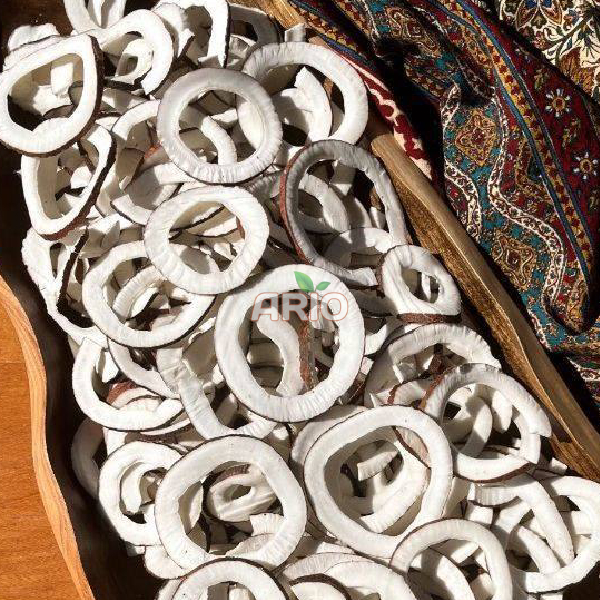
Dried Coconut Supplier & Exporter from Iran
Ario processes, packages, and exports export-grade dried coconut from our facility in Iran to wholesale buyers, food manufacturers, and retail brands across Europe, the United States, the Arab Gulf states, India, and China. Dried coconut is part of our broader dried fruit product range, and below you will find our product grades, current market pricing benchmarks, quality process, and the steps to request a quote or free sample.
Grades and Cut Sizes
| Grade | Texture | Common Use |
|---|---|---|
| Extra Fine | Powder-like | Fillings, pastes, confectionery |
| Fine | Soft, small shred | Baking, cake mixes |
| Medium | Visible shred | Toppings, coatings |
| Coarse or Chips | Larger flakes | Granola, snack inclusions, garnish |
Sweetened vs Unsweetened, High-Fat vs Low-Fat
Ario supplies dried coconut in both sweetened and unsweetened formats, as well as high-fat and low-fat (defatted) variants depending on your application.
| Type | Fat Content | Best For |
|---|---|---|
| High-Fat (Standard) | Approximately 60 percent or higher | Bakery, confectionery, full-flavor applications |
| Low-Fat (Defatted) | Approximately 25 to 35 percent | Dietary products, industrial blending |
| Sweetened | Added sugar coating | Snacks, dessert toppings |
| Unsweetened | No added sugar | Clean-label, keto, and health-focused products |
Why Source Dried Coconut Through Iran
Coconuts do not grow in Iran, so we are transparent about this from the start. Ario sources fresh coconut kernels from established tropical growing regions and processes, dries, and packages them at our facility in Iran before export. This gives buyers a processing and logistics partner that combines competitive regional costs with direct access to Gulf, European, and Asian shipping routes.
What you are buying is not “grown in Iran” coconut but coconut that is processed, quality-checked, and exported from Iran under our own grading and packaging standards.
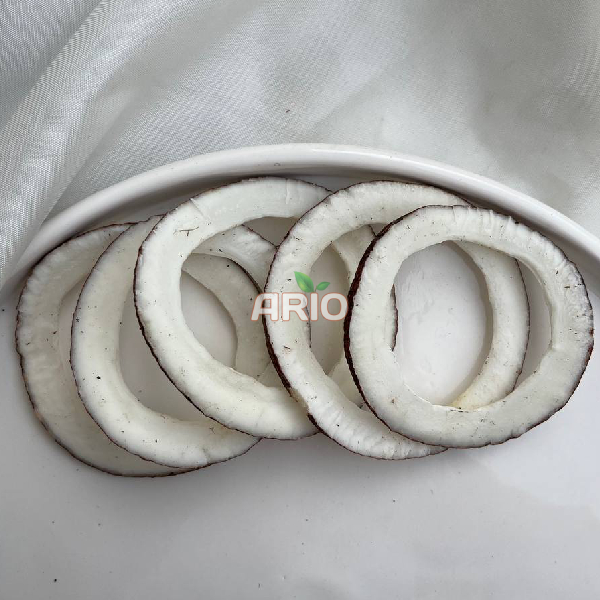
Dried Coconut Nutrition Overview
Dried coconut is calorie-dense and rich in fat, most of it saturated fat in the form of medium-chain triglycerides (MCTs), along with dietary fiber, iron, and potassium.
| Nutrient (per 100g, unsweetened) | Amount |
|---|---|
| Calories | ~660 kcal |
| Total Fat | ~64.5 g |
| Saturated Fat | ~57 g |
| Carbohydrates | ~23.7 g |
| Dietary Fiber | ~16.3 g |
| Sugar | ~7.4 g |
| Protein | ~6.9 g |
| Iron | ~3.3 mg |
| Potassium | ~543 mg |
Because of its high fat and calorie density, dried coconut is typically used in moderate portions as an ingredient rather than eaten in large quantities on its own. Unsweetened varieties are the preferred choice for keto, low-sugar, and clean-label product lines.
Current Dried Coconut Market Pricing
Dried coconut pricing varies by grade, fat content, and certification level. As of 2026, standard industrial FOB lots of desiccated coconut and coconut flakes are typically priced between 3.20 and 4.30 USD per kilogram, while lower-end bulk offers from Southeast Asian origins can range from 0.60 to 2.50 USD per kilogram. Premium certified or organic lots command higher prices, generally between 4.00 and 9.00 USD per kilogram.
These figures reflect global market benchmarks, not a fixed quote. Ario provides current FOB pricing based on your target grade, fat content, volume, and destination market.
| Factor | Effect on Price |
|---|---|
| Fat content and grade | High-fat, fine-grade product typically costs more than low-fat or coarse grades |
| Certification | Organic, Halal, or Kosher certified lots carry a price premium |
| Moisture and particle size specs | Tighter specifications increase processing cost |
| Order volume and packaging | Bulk multiwall or poly-lined bags reduce per-unit cost versus retail packaging |
Packaging and Order Options
| Format | Packaging Options | Typical Use Case |
|---|---|---|
| Fine or Medium Shred | 5, 10, 12.5, or 25 kg multiwall or poly-lined bags | Bulk purchase, food manufacturing |
| Coarse or Chips | 5 to 25 kg bulk bags | Snack production, garnish use |
| Retail Pack | 100g to 500g pouches | Retail-ready, private label |
| Private Label | Custom design and labeling | Retail brand entry |
Our Quality Control Process
Every batch we process and export goes through a structured quality process before it leaves our facility.
- Kernel inspection and sorting to remove damaged or discolored coconut meat
- Controlled drying with moisture monitoring to reach export-grade specifications
- Particle size grading to match the requested fine, medium, or coarse cut
- Hygienic packaging in a controlled environment to protect against contamination during transit
Ario holds the following certifications, and copies are available on request during buyer due diligence.
| Certification | What It Confirms |
|---|---|
| HACCP | Systematic food safety controls across every stage of processing |
| ISO 22000 | Internationally recognized food safety management system |
| Halal | Product and process compliance with Halal requirements |
Export Documentation Checklist
| Document | Purpose |
|---|---|
| Phytosanitary Certificate | Confirms product is free of pests |
| HS Code Classification (0801.11) | Required for customs clearance |
| Certificate of Origin | Needed for trade agreement eligibility |
| Quality or Lab Test Report | Supports buyer due diligence, including moisture and fat content |
Export Markets We Serve
Ario currently exports dried coconut to buyers across Europe, the United States, the Arab Gulf states, India, and China, supplying both wholesale distributors and private label retail brands.
How to Request a Quote or Free Sample
1. Send Your Requirements
Share your target grade, fat content, sweetened or unsweetened preference, packaging, and order volume with our export team by email or WhatsApp.
2. Receive a Sample and Spec Sheet
We arrange a sample shipment along with moisture content, fat content, and product specification details so you can verify quality before committing.
3. Confirm Pricing and Terms
Once the sample is approved, we provide FOB or CIF pricing and finalize shipping terms based on your destination.
4. Place and Track Your Order
After payment confirmation, your order is packed, documented, and shipped, with tracking details provided throughout.
Frequently Asked Questions
Does coconut actually grow in Iran? No, coconuts do not grow in Iran’s climate. Ario sources coconut kernels from established tropical growing regions and processes, dries, and packages the product at our facility in Iran before export.
Do you offer free samples before a bulk order? Yes, we can arrange a small sample shipment so you can verify grade, texture, and fat content before committing to a full container order.
What is the difference between high-fat and low-fat dried coconut? High-fat dried coconut retains most of its natural oil content and is preferred for bakery and confectionery use, while low-fat or defatted coconut has reduced oil content for dietary or industrial applications.
Can you produce private label packaging for my brand? Yes, we offer custom labeling and packaging for retail-ready products, so you can enter new markets under your own brand name.
What is your minimum order quantity? Our standard bulk orders typically start from around 1 metric ton, with smaller trial orders available on request for new buyers.
How long does it take to receive an order after confirmation? Lead times generally range from 2 to 4 weeks from confirmed payment and packaging approval, depending on order size and season.
Is your dried coconut certified for international food safety standards? Yes, Ario holds HACCP, ISO 22000, and Halal certification, and we provide certificate copies to buyers during due diligence.
Ready to source dried coconut in bulk? Request current FOB pricing, a spec sheet, or a free sample from our export team today.
Email: iranianfruit@gmail.com Phone: +98 21 6501 8726 WhatsApp: +98 912 466 3086
Reviews
There are no reviews yet.