
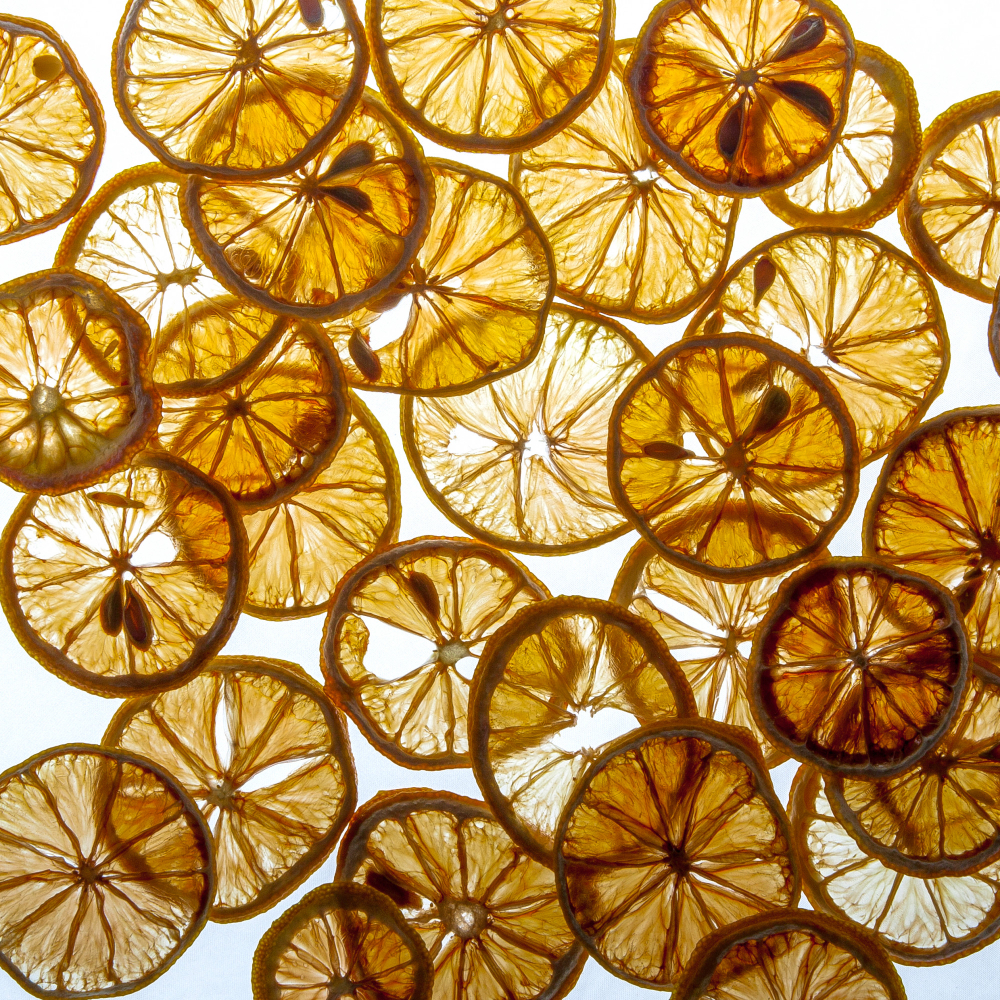
Table: Iran Dried Lemon Specifications
| Parameter | Specification |
|---|---|
| Product Type | Whole / Sliced |
| Color | Natural yellow to light brown |
| Moisture Content | Max 10–12% |
| Flavor Profile | Sour, aromatic |
| Additives | None |
| Shelf Life | Up to 24 months |
Dried Lemon for Wholesale and Export Markets
Dried lemon is a simple product with complex buying decisions behind it. Buyers care about quality, consistency, price stability, and export readiness, especially when sourcing alongside other items from a structured Dried Fruit portfolio for international distribution.
what dried lemon is, how it is processed, how quality is defined, and what bulk buyers should evaluate before sourcing.
By the end, importers and food industry professionals who already work with products like Dried Apricot will have a clear framework for selecting dried lemon that meets both technical and commercial requirements.
Dried Lemon Product Overview
Dried lemon is produced by dehydrating fresh lemons to reduce moisture while preserving acidity, aroma, and flavor, similar to controlled dehydration methods used in premium Dried Fig processing.
It is commonly supplied as sliced dried lemon, whole dried lemon, or processed forms such as peel or powder. Like Dried Apple, dried lemon offers longer shelf life, easier storage, and consistent flavor intensity, making it suitable for industrial use and international trade.
For bulk buyers, product uniformity matters more than appearance alone. Consistent slice thickness, controlled moisture, and stable color—qualities also expected in Dried Orange—indicate proper processing and predict reliable performance in food applications.

Iranian dried lemon is valued for its intense aroma and balanced acidity, characteristics that buyers often compare with specialty items such as Dried Cherry when sourcing premium dried fruits.
Dried Lemon Specifications
Technical specifications define whether dried lemon is suitable for wholesale and export markets. Key parameters include moisture content, slice size or whole fruit diameter, color range, aroma strength, and defect tolerance, similar to grading systems applied to Dried Plum.
Export-grade dried lemon typically has controlled moisture levels to prevent mold growth while maintaining flexibility rather than brittleness, a standard also expected for products like Aloo Bukhara in professional supply chains.
Additives and preservatives should be clearly declared or absent, depending on buyer requirements. Many professional buyers prefer dried lemon without sulfur treatment, following the same clean-label expectations seen in Dried Peach sourcing.
Dried Lemon Processing Method
The drying method directly affects quality and price. Sun drying is often used for cost efficiency but requires strict environmental control to ensure hygiene and consistency. Machine drying allows better control over temperature and airflow, resulting in more uniform color, aroma, and moisture levels.
Processing also includes washing, slicing, sorting, and final inspection. Careful handling during each step reduces breakage and foreign matter, which is critical for export-grade shipments.
Whole vs. Sliced Dried Lemon
Whole and sliced dried lemons differ in appearance, processing requirements, and end-use applications. The right option depends on the buyer’s product specifications and intended use.
Whole dried lemon retains the fruit’s overall shape and is suitable for applications where the fruit is used intact or processed further. Buyers should confirm the required size, color, moisture content, and degree of drying before placing a bulk order.
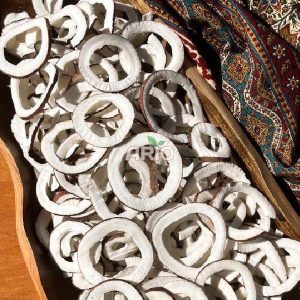
Sliced dried lemon is cut into pieces before or during the dehydration process. It can be suitable for tea blends, herbal infusions, beverage ingredients, food decoration, and applications where smaller citrus pieces are preferred. Slice thickness, diameter, color, and breakage rate may affect product suitability and pricing.
| Specification | Whole Dried Lemon | Sliced Dried Lemon |
|---|---|---|
| Product form | Whole fruit | Cut slices |
| Common applications | Further processing and selected food applications | Tea, beverage blends, food decoration, and ingredient use |
| Key purchasing criteria | Fruit size, appearance, moisture content | Slice thickness, diameter, color, and breakage |
| Packaging requirements | Depends on order volume and buyer specifications | Depends on order volume and buyer specifications |
For wholesale and export orders, buyers should specify the required form, quality parameters, packaging, quantity, and destination market. Confirm the available product forms and specifications with Iran Fruit before ordering.
Dried Lemon vs. Dried Lime
Dried lemon and dried lime are different citrus products, although their names are sometimes used interchangeably in commercial listings. Identifying the correct fruit is important for importers, food manufacturers, spice distributors, and wholesalers.
Dried lemon generally refers to dehydrated lemon (Citrus limon). Depending on the processing method, it may be sold as whole fruit, slices, or other processed forms. Its suitability depends on the intended application and the product’s actual characteristics.
Dried lime, including black lime or limoo amani, is commonly made from limes that are dried until their exterior becomes yellow-brown to dark brown or black. It is widely used in Iranian and Middle Eastern cooking, particularly in soups, stews, and rice dishes. Its flavor is typically sour, with distinctive bitter and earthy notes.
| Feature | Dried Lemon | Dried Lime / Black Lime |
|---|---|---|
| Citrus type | Generally lemon (Citrus limon) | Generally lime, often used for limoo amani |
| Typical appearance | Depends on whether it is whole or sliced and on the drying method | Often yellow-brown, dark brown, or black |
| Common applications | Tea, beverages, food ingredients, and further processing | Persian and Middle Eastern stews, soups, rice dishes, and seasoning |
| Important buying check | Confirm fruit type, form, and processing specifications | Confirm lime type, color, whole or ground form, and intended culinary use |
Product names and common citrus terminology can vary between suppliers and markets. Importers should therefore confirm the botanical or commercial product identity, product form, ingredients, and intended use before finalizing an order.
If you are sourcing dried lemon from Iran, specify whether you require dehydrated yellow lemon or dried lime (limoo amani). This helps avoid product mismatches and ensures that the quotation reflects the correct item.
Dried Lemon Export Requirements and Documentation
Exporting dried lemon requires the correct product description, commercial documents, and compliance with the destination market’s food import requirements. The exact documents depend on the importing country, product classification, processing method, and applicable regulations.
Documents Commonly Used for Dried Lemon Exports
| Document | Purpose | Important note |
|---|---|---|
| Commercial invoice | Records the goods, quantity, value, buyer, and seller | Details should match the shipment and sales agreement |
| Packing list | Describes packages, net and gross weights, and shipment details | Package counts and weights should match the actual consignment |
| Certificate of origin | Identifies the country of origin when required or requested | Issuing procedures and requirements depend on the destination and transaction |
| Certificate of analysis (COA) | Reports specified laboratory test results, where available or required | Test parameters should match the buyer’s specifications and applicable regulations |
| Health or food-safety documentation | Demonstrates compliance with applicable requirements when required | The exact document depends on the destination market and product category |
| Phytosanitary certificate | Certifies plant-health compliance for regulated products when required | It is not automatically required for every processed or dried citrus product |
Commercial invoices, packing lists, and origin documentation are among the documents that may be required for international trade. Additional certificates or permits depend on the destination country and the specific product.
For the European Union, importers must also verify applicable food-safety and official-control requirements. Phytosanitary certification applies to regulated plants and plant products under the relevant rules; it should not be assumed to be mandatory for every dried lemon shipment without checking the product classification and applicable requirements.
What Importers Should Confirm Before Ordering
Before confirming a dried lemon shipment, buyers should:
- Identify the exact product, including whether it is dried lemon or dried lime.
- Agree on the product form, quality specifications, packaging, quantity, and labeling requirements.
- Confirm the applicable import requirements and documents for the destination country.
- Request available laboratory reports and other supporting documents relevant to the order.
- Ensure that product descriptions, weights, origin details, and quantities are consistent across the commercial documents.
Iran Fruit can discuss product specifications and export documentation requirements with prospective buyers. The availability of specific certificates, laboratory reports, and packaging options should be confirmed for the requested product and destination before the order is finalized.
Contact Iran Fruit to request a quotation for dried lemon and discuss your bulk order requirements.
Dried Lemon Applications
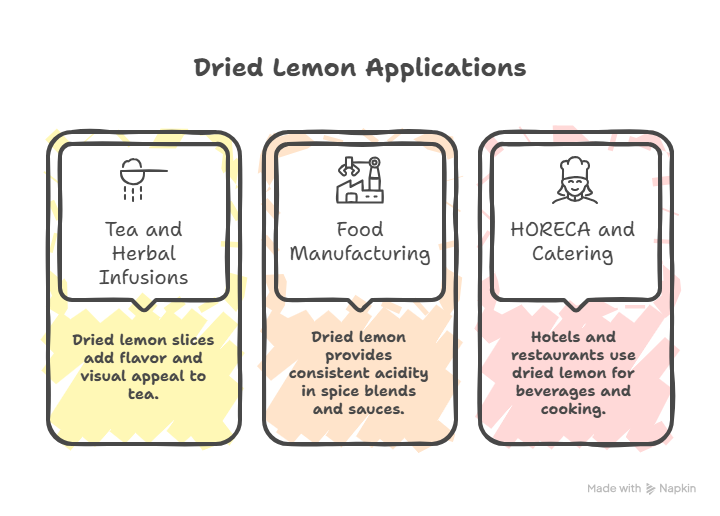
Dried lemon is widely used across food and beverage sectors due to its stable acidity and citrus aroma.
1. Tea and Herbal Infusions
Dried lemon slices are commonly used as tea ingredients or garnishes, valued for both flavor and visual appeal.
2. Food Manufacturing
Manufacturers use dried lemon in spice blends, sauces, marinades, and seasoning mixes where consistent acidity is required.
3. HORECA and Catering
Hotels and restaurants use dried lemon for beverage service, cooking, and presentation, benefiting from long shelf life and reduced waste.
Dried Lemon Packaging Options
Packaging protects product quality during transport and storage. Bulk packaging usually includes multi-layer cartons with inner food-grade poly bags. Vacuum packaging may be used to extend shelf life and protect aroma.
Private label and retail-ready packaging are available for distributors targeting consumer markets. Packaging choice affects logistics costs, shelf life, and regulatory compliance.
Dried Lemon Wholesale Price
Wholesale dried lemon prices depend on quality grade, drying method, packaging type, and order volume. Export prices are usually quoted per kilogram under standard trade terms. Buyers should evaluate price alongside specifications, as lower prices often reflect higher moisture, uneven cuts, or reduced quality control.
Stable pricing over time is a key indicator of a reliable supplier with controlled sourcing and production capacity.
Origin and Production Region
Production region influences both quality and supply stability. Lemons grown in regions with suitable climate conditions typically produce stronger aroma and balanced acidity. Consistent agricultural practices and access to fresh raw material ensure year-round processing capability, which is essential for long-term supply contracts.
Quality Standards and Food Safety
Export-quality dried lemon must comply with food safety requirements. Quality control usually includes visual inspection, moisture testing, and hygiene monitoring during processing. Buyers may request certificates, batch traceability, and laboratory analysis depending on destination market regulations.
Clear documentation and transparent quality procedures reduce risk for importers and distributors.
Shelf Life and Storage Conditions
Dried lemon has a long shelf life when stored properly. It should be kept in a cool, dry environment away from direct sunlight and humidity. Proper storage preserves aroma, color, and texture throughout the product’s usable life.
Shelf life varies based on moisture level and packaging but is significantly longer than fresh lemons.
Bulk Supply and Export Availability
Bulk supply requires production capacity, consistent specifications, and export documentation readiness. Professional suppliers support large-volume orders, stable lead times, and flexible shipping terms. Buyers should confirm minimum order quantities, production timelines, and logistics options before finalizing contracts.
Frequently Asked Questions About Iranian dried orange
What is dried lemon used for?
Dried lemon is used in tea, food manufacturing, spice blends, sauces, and catering applications.
How long does dried lemon last?
When stored correctly, dried lemon typically has a long shelf life due to reduced moisture content.
Is dried lemon the same as dried lime?
No. Dried lemon is made from Citrus limon, while dried lime is a different product with distinct flavor and processing characteristics.
What affects the wholesale price of dried lemon?
The price depends on product form, size, quality, moisture content, processing, packaging, and order quantity. Shipping costs and delivery terms also affect the final export cost.
Can I buy dried lemon in bulk from Iran?
Bulk availability depends on the product specification, order quantity, and supplier capacity. Contact Iran Fruit to confirm current availability, packaging options, and export quotation.
What should importers check before buying dried lemon?
Importers should confirm the product type, moisture specification, appearance, packaging, shelf life, food-safety documentation, and destination-country requirements before confirming an order.

Elena Rossi –
Can you provide information on bulk packaging options for export? We usually ship to multiple European distributors and need protective packaging to maintain quality.
afruit –
Absolutely, Elena. We offer multilayer cartons with food-grade poly bags, vacuum packing for extended shelf life, and private label options suitable for international shipments.
Aisha Al-Mansoori –
We sourced whole dried lemon for our spice blends, and the aroma consistency was impressive across batches. It helped us maintain product quality.
afruit –
Thank you for your feedback. We focus on consistent processing and quality control to support industrial applications like yours.