
Why Are Dehydrated Orange Products Gaining Global Demand?
Fresh oranges are highly perishable, yet food manufacturers need citrus ingredients throughout the year. This creates an interesting paradox. The fruit is seasonal, but demand is constant.
That is why dehydrated orange products have become an important ingredient category across food manufacturing, beverage production, bakery, confectionery, tea blending, and nutraceutical industries. By removing moisture while preserving aroma, flavor, and nutritional compounds, processors create products that are easier to store, transport, and use in industrial applications.
For importers and bulk buyers, understanding the differences between dried orange dice, dried orange slices, dried orange peel powder, and dried orange peel coarse can help reduce sourcing risks and improve purchasing decisions.
What Are Dehydrated Orange Products?
Dehydrated orange products are made by removing most of the water content from fresh oranges through controlled drying processes.
The resulting ingredients offer longer shelf life, lower transportation costs, and greater stability compared with fresh fruit.
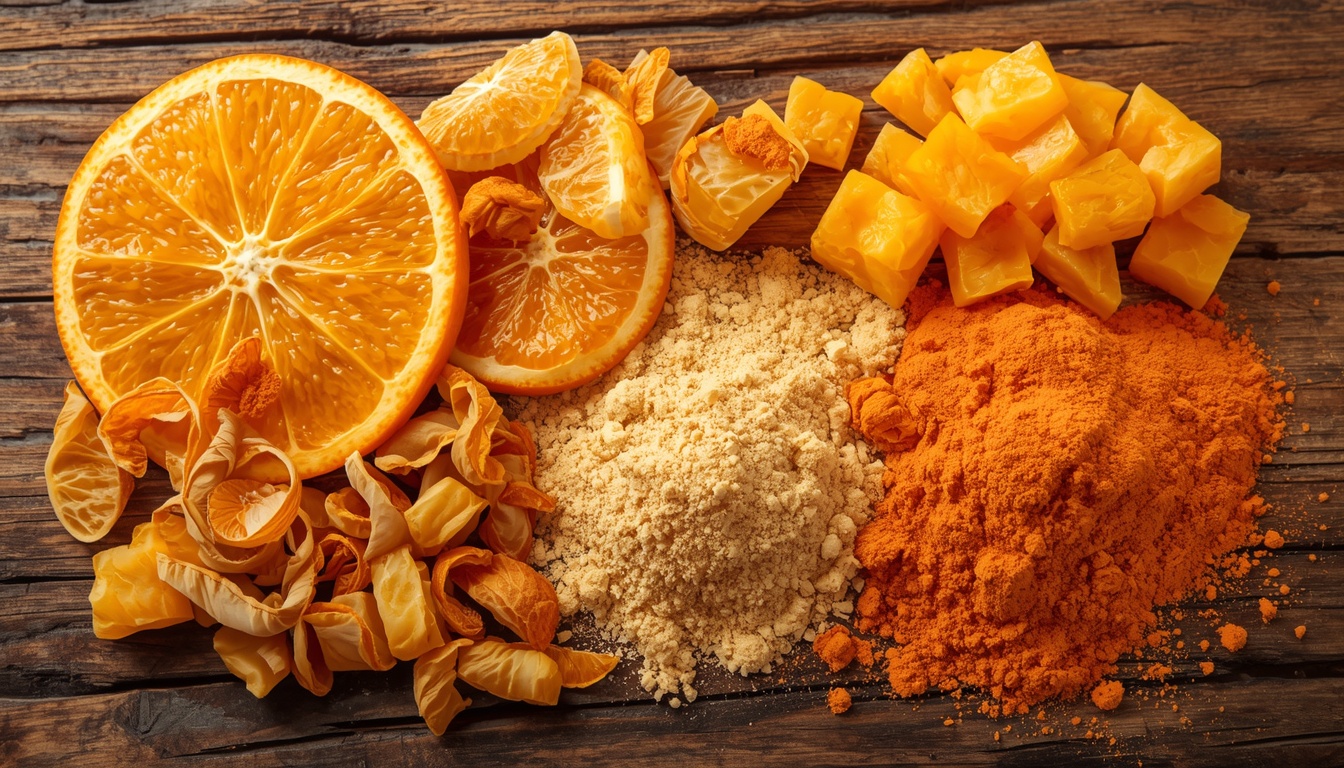
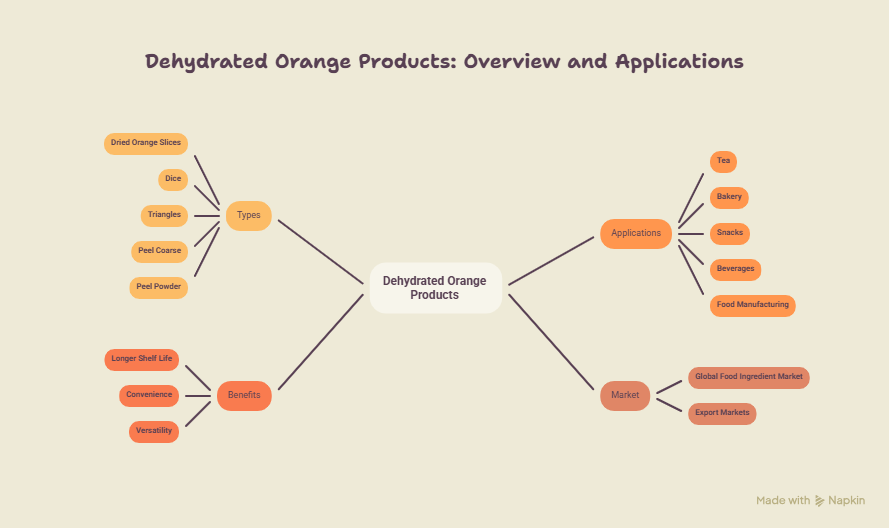
Common dehydrated orange products include:
- Dehydrated orange slices
- Dried orange triangle
- Dried orange dice
- Dried orange peel coarse
- Dried orange peel powder
- Dehydrated peel powder
Most commercial products maintain moisture levels below 10 percent, allowing storage periods of 12 to 24 months under suitable conditions.
Understanding the Main Types of Dehydrated Orange Products
1. Dehydrated Orange Slices for Beverages and Garnishes
Dehydrated orange slices are among the most recognizable dried citrus products.
They are widely used in:
- Cocktail garnishes
- Herbal teas
- Fruit infusions
- Decorative food presentations
- Premium gift packs
The food service sector values these slices because they provide visual appeal while reducing waste compared with fresh citrus.
2. Dried Orange Triangle for Tea and Snack Applications
Dried orange triangle pieces are cut into triangular segments before drying.
Manufacturers frequently use them in:
- Fruit tea blends
- Healthy snack mixes
- Breakfast cereals
- Gourmet food products
Their uniform shape improves packaging efficiency and creates an attractive appearance in finished products.
3. Dried Orange Dice for Food Manufacturing
Dried orange dice are small cube-shaped pieces of dehydrated orange.
This product is especially popular in:
- Bakery fillings
- Chocolate products
- Granola blends
- Energy bars
- Breakfast cereals
Food manufacturers prefer dried orange dice because they distribute evenly throughout formulations and provide consistent flavor in every batch.
4. Dried Orange Peel Coarse for Flavor Development
Dried orange peel coarse consists of larger granules of dried peel.
Its primary applications include:
- Tea blending
- Spice mixtures
- Natural flavoring systems
- Beverage formulations
The coarse particle size helps maintain aroma during storage and processing.
5. Dried Orange Peel Powder for Industrial Applications
Dried orange peel powder is produced by grinding dehydrated orange peel into a fine powder.
Industries using orange peel powder include:
- Food manufacturing
- Cosmetics
- Nutraceuticals
- Dietary supplements
- Functional beverages
Orange peel contains valuable compounds including dietary fiber and essential oils, making it useful in numerous formulations.
Comparison of Popular Dehydrated Orange Products
| Product | Main Use | Shelf Life | Demand Level |
|---|---|---|---|
| Dehydrated Orange Slices | Garnishes and tea | 12–24 months | High |
| Dried Orange Triangle | Tea and snacks | 12–24 months | Medium |
| Dried Orange Dice | Bakery and cereals | 12–24 months | High |
| Dried Orange Peel Coarse | Flavoring and tea | 18–24 months | High |
| Dried Orange Peel Powder | Food ingredients | 18–24 months | Very High |
Benefits of Using Dehydrated Orange Products
Several factors continue to drive market growth.
Longer Shelf Life
Drying significantly extends product usability while reducing spoilage losses.
Lower Transportation Costs
Removing water reduces weight and shipping expenses.
Year-Round Availability
Manufacturers can maintain stable production schedules regardless of harvest season.
Natural Citrus Flavor
Consumers increasingly prefer natural flavor sources over artificial additives.
This trend has increased demand for dehydrated citrus ingredients in clean-label food products.
Quality Factors That Buyers Should Evaluate
Not all dehydrated orange products offer the same quality.
Professional buyers should examine:
1. Moisture Content
Lower moisture generally means better shelf stability.
2. Color Consistency
Bright orange color often indicates proper processing and fresh raw materials.
3. Aroma Strength
Strong citrus aroma is an important quality indicator.
4. Particle Size Uniformity
Consistency improves manufacturing performance.
5. Food Safety Compliance
Products should meet microbiological and pesticide residue standards required by destination markets.
Current Prices of Dehydrated Orange Products
Prices vary significantly based on origin, drying method, certification, packaging, and order volume.
Recent wholesale and bulk market data suggests the following approximate ranges:
| Product | Typical Bulk Price |
| Dried Orange Peel Powder | USD 7–10 per kg |
| Dried Orange Peel Coarse | USD 8–11 per kg |
| Dried Orange Dice | USD 6–12 per kg |
| Dried Orange Triangle | USD 6–12 per kg |
| Dehydrated Orange Slices | USD 8–15 per kg |
Retail prices are considerably higher and may exceed USD 40–90 per kg depending on packaging and market positioning.
Market Trends Shaping the Dehydrated Orange Industry
Several trends are influencing demand worldwide.
Growing Demand for Clean Label Ingredients
Consumers increasingly seek recognizable natural ingredients.
Expansion of Functional Foods
Manufacturers are incorporating citrus ingredients into health-focused products.
Growth in Premium Tea Blends
Orange peel and dried orange pieces are becoming common components of specialty tea formulations.
Increased Interest in Sustainable Ingredients
Food companies are finding value in utilizing orange peel, which was once considered a by-product.
Conclusion
Dehydrated orange products have evolved from simple dried fruit ingredients into valuable components used across multiple industries. Whether sourcing dried orange dice for bakery production, dried orange peel powder for food manufacturing, or dehydrated orange slices for beverage applications, buyers should evaluate quality, moisture levels, food safety compliance, and supplier reliability before making purchasing decisions.
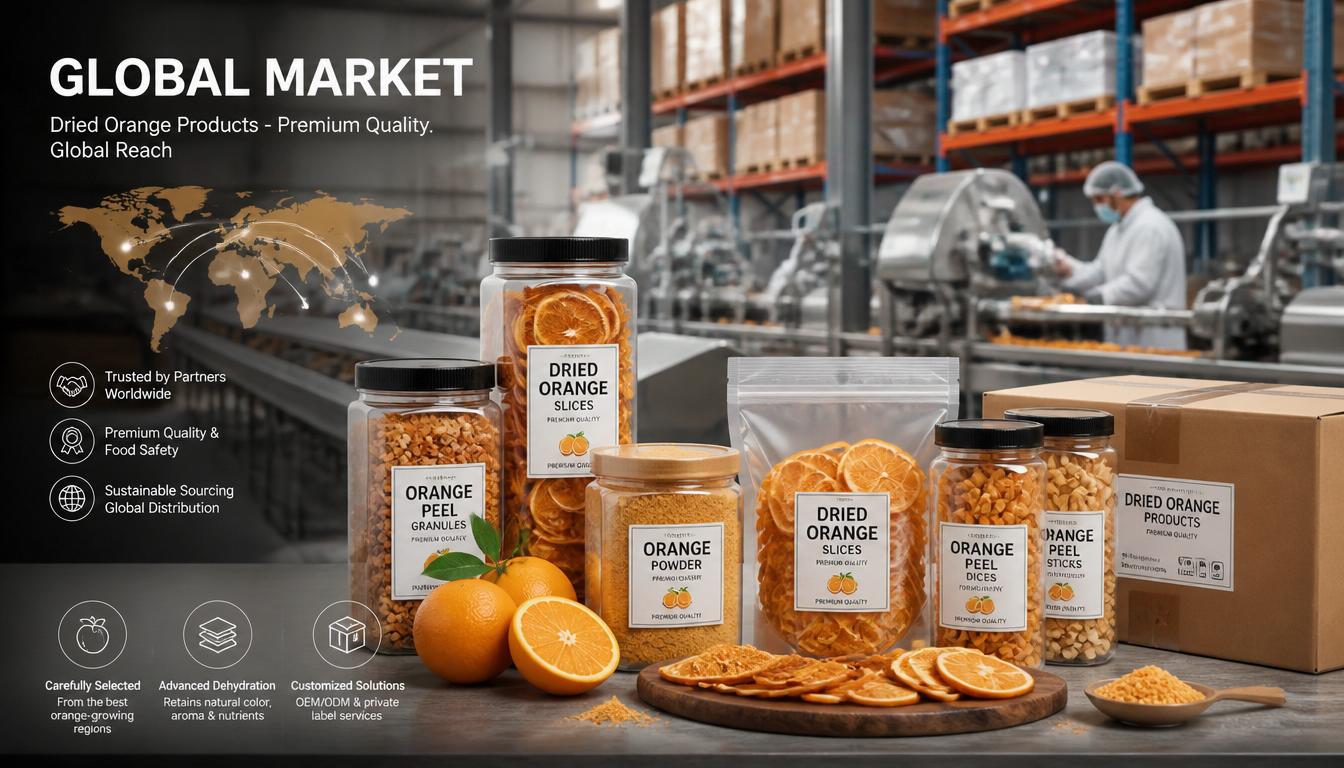
As demand for natural ingredients continues to grow, dehydrated orange products are expected to remain an important category within the global food ingredient market.
Frequently Asked Questions
What are dehydrated orange products?
They are orange-based ingredients produced by removing moisture from fresh oranges while preserving flavor, aroma, and shelf stability.
What is dried orange peel powder used for?
It is commonly used in food manufacturing, tea blends, bakery products, nutraceuticals, and cosmetic formulations.
What is the difference between dried orange dice and dehydrated orange slices?
Dried orange dice are small cubes used as ingredients, while dehydrated orange slices are whole slices mainly used for garnishes and beverages.
How long do dehydrated orange products last?
Most products remain stable for 12 to 24 months when stored in cool and dry conditions.
Which dehydrated orange product has the highest industrial demand?
Dried orange peel powder and dried orange dice currently show strong demand because of their versatility in food manufacturing.