
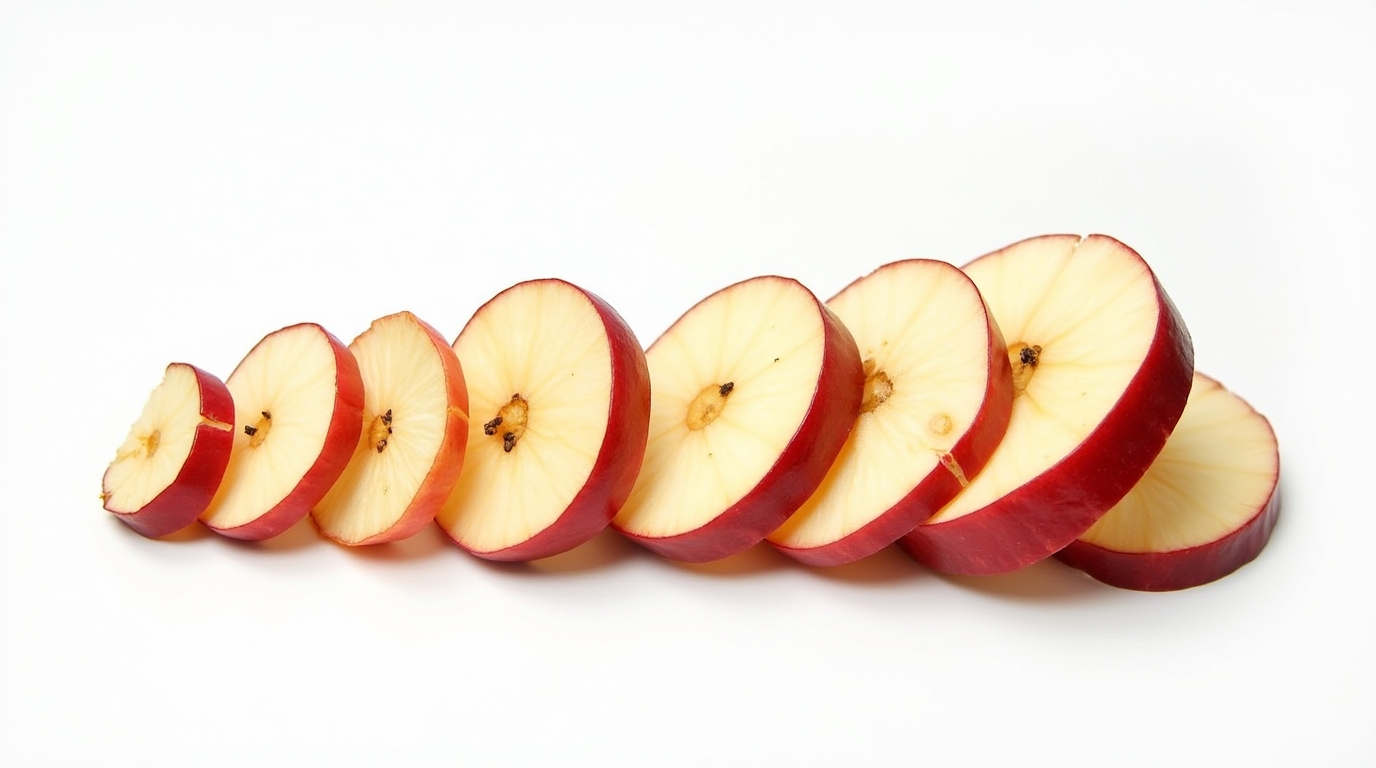
What factors shape Iran dried apple wholesale prices?
-
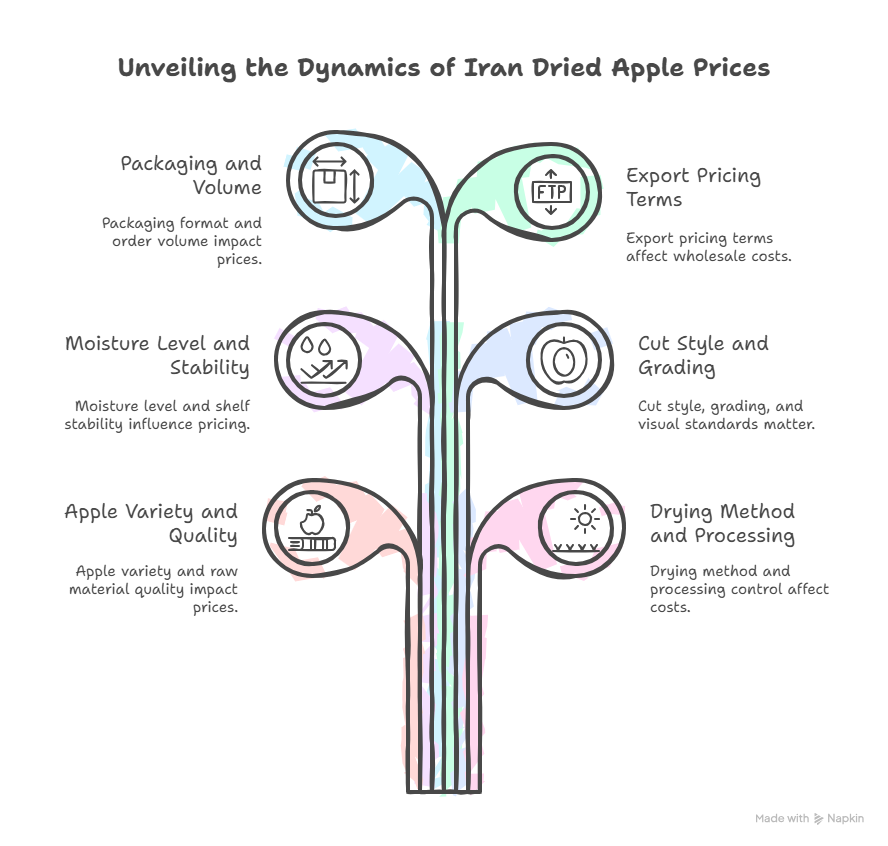
Apple variety and raw material quality
-
Drying method and processing control
-
Moisture level and shelf stability requirements
-
Cut style, grading, and visual standards
-
Packaging format and order volume
-
Export pricing terms such as FOB or local wholesale
Iran Dried Apple Price Factors That Shape Wholesale Costs
Wholesale buyers often expect dried apple prices to be predictable, yet the reality feels contradictory. The same product from the same country can arrive with different price tags. This article explains Iran dried apple price dynamics and shows how wholesale costs are formed step by step.
You will learn which variables matter most, how to read supplier offers, and how to avoid paying for features you do not need. The clear takeaway is control. When buyers understand cost drivers, negotiations become factual rather than speculative.
Table: Key Factors and Their Impact on Wholesale Price
| Factor | Effect on Price | Buyer Relevance |
|---|---|---|
| Apple variety | Medium to high | Affects texture and sweetness |
| Drying method | High | Determines shelf life and safety |
| Moisture level | High | Impacts transport risk |
| Cut style | Medium | Influences yield and labor |
| Sorting and grading | Medium | Matters for retail use |
| Packaging type | Low to medium | Affects logistics and handling |
| Order volume | High | Reduces unit cost |
Why Iran Is a Competitive Source for Dried Apples
Iran benefits from large apple-growing regions, established drying facilities, and experienced processors, which collectively support a diverse portfolio of export-ready products across the wider dried fruit category.
These structural advantages keep bulk dried apple prices competitive in regional and global markets. However, competitiveness does not mean uniform pricing. Wholesale costs reflect production choices, quality targets, and market timing. Buyers who treat Iran as a single price point often miss these nuances and misjudge offers.
1. Apple Variety and Raw Material Quality
Apple variety directly influences yield, sweetness, and texture after drying, much like varietal differences observed in premium stone fruits such as dried apricot. Firmer apples with balanced sugar content produce slices that hold shape and color.
Higher-quality raw material increases processing efficiency and lowers defect rates, but it raises the base cost. Lower-grade apples reduce input costs yet result in darker color and uneven texture, which affects price acceptance in retail markets.
2. Drying Method and Processing Control
Drying technique plays a central role in wholesale pricing and mirrors the cost logic applied to sensitive fruits like dried fig, where controlled dehydration is essential.
Industrial drying preserves color and aroma while reducing microbial risk, but it requires higher energy input and monitoring.
Buyers targeting export markets usually pay a premium for consistent moisture levels and longer shelf stability, even if the visual difference seems subtle.
3. Slice Style Thickness and Yield Loss
Cut style determines both labor input and yield loss, similar to processing decisions seen in visually driven products such as dried orange. Thin slices dry faster but shrink more, reducing output per kilogram of fresh apples.
Thicker slices preserve weight but require longer drying cycles. Rings, dices, and custom cuts each carry different cost implications. Clear specification prevents confusion when comparing supplier quotes.
4. Moisture Level Shelf Stability and Compliance
Moisture content affects shelf life, transport safety, and compliance with import standards, a critical factor for long-distance shipments of products like dried cherry. Lower moisture reduces spoilage risk during transit, especially in warm climates, but requires longer drying and stricter testing.
Buyers focused on shorter supply chains may accept higher moisture to lower costs, provided storage conditions are well controlled.
5. Sorting Grading and Visual Uniformity
Uniform color and size matter for retail packaging but less for industrial use, a distinction also seen in bulk items such as dried plum.
Intensive sorting raises labor costs and waste, pushing prices upward. Mixed grades cost less and suit bakeries or processors. Understanding the intended application helps buyers avoid paying for visual perfection that adds no functional value.
6. Packaging Order Volume and Export Terms
Bulk cartons offer the lowest unit price, while retail-ready packaging adds material and handling costs, following the same pricing logic applied to traditional export items like dried aloo bukhara. Order volume also matters.
Larger contracts reduce per-kilogram pricing through scale efficiencies. Export terms such as local wholesale pricing versus FOB pricing further shift cost responsibility and final landed price.
Conclusion
Iran dried apple prices are shaped by choices rather than randomness, just as they are for soft-fruit products like dried peach. Variety, processing, moisture control, grading, packaging, and order size all contribute to wholesale cost.
Buyers who define specifications clearly and align them with market needs gain pricing transparency and stronger bargaining power across multiple dried fruit categories.
Frequently Asked Questions
What affects the price of Iran dried apples most
Raw material quality and drying control usually have the greatest impact on wholesale price, especially when buyers compare apples with other citrus-based products such as dried lemon.
Why do suppliers quote different prices for the same product
Differences often come from moisture level, cut style, grading, and packaging rather than location alone.
How can buyers reduce wholesale dried apple costs
Align specifications with actual use, increase order volume, and clarify export terms before requesting quotes.
Shawn42
How does the apple variety affect bulk pricing for large orders? Are certain types more cost-effective for industrial use?
afruit
Shawn, firmer apples with balanced sweetness generally offer better yield and stability, which reduces processing costs for industrial orders.
Elena Petrova
Can moisture levels be adjusted for long-distance shipping without compromising quality?
afruit
Yes, Elena. Our processors control moisture precisely to match shipping duration, ensuring shelf stability without affecting texture or flavor.